Yandole Krython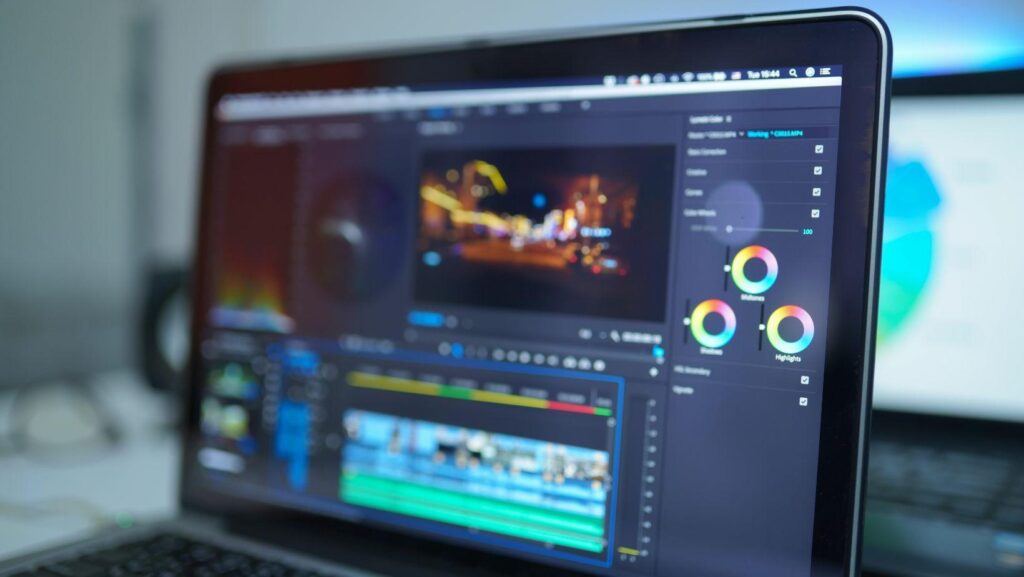
Video editing has traditionally been one of the most time-consuming parts of content creation. Even a relatively short video can require hours of reviewing footage, removing mistakes, adding captions, adjusting audio, choosing transitions, and preparing different versions for social platforms.
Artificial intelligence is changing that workflow. Modern AI video tools can automate many repetitive tasks while leaving creative decisions in the hands of the editor. The result is not necessarily a completely automated production process, but a faster and more flexible way to turn raw footage into finished content.
From Manual Editing to AI-Assisted Workflows
Traditional editing requires creators to work through footage manually and make decisions at the timeline level. AI-assisted editing introduces another layer between the creator and the editing software.
Instead of performing every repetitive action individually, creators can use AI to identify useful sections of footage, generate captions, remove silence, improve audio, or adapt a video for different formats.
Some workflows also use conversational AI during the planning and editing process. A ChatGPT video editing tool can be useful as part of this broader workflow by helping creators develop scripts, organize ideas, generate editing instructions, create titles, and turn transcripts into structured content. The actual editing capabilities depend on the specific application and its integration with video-editing software.
This distinction is important because AI assistants and AI video editors are not necessarily the same thing. Some applications specialize in understanding instructions and content, while dedicated editing platforms handle the timeline, media files, effects, and final rendering.
AI Can Handle Repetitive Editing Tasks
One of the biggest advantages of AI in video production is automation.
Tasks such as removing long pauses, detecting filler words, generating subtitles, and reframing horizontal footage for vertical platforms can require significant manual effort. AI can perform an initial pass over these tasks much faster, allowing an editor to concentrate on storytelling and quality control.
For example, a creator recording a one-hour interview may want to produce a long-form YouTube video as well as several short clips. AI can help identify sections of the transcript, suggest potential highlights, and prepare different versions for review.
The editor still needs to decide whether those selections actually make sense. AI can recognize patterns, but context, humor, emotion, pacing, and audience expectations often require human judgment.
AI Video Generation and AI Video Editing Are Different
The terms “AI video” and “AI video editing” are sometimes used interchangeably, but they describe different processes.
AI video generation typically starts with a text prompt, image, or other input and creates new visual content. AI video editing, on the other hand, usually starts with existing footage and modifies, organizes, or enhances it.
There is also a growing middle ground. Some platforms can generate B-roll, replace backgrounds, extend shots, create voiceovers, or make other additions to existing projects.
Understanding this distinction helps creators select technology based on their actual needs rather than simply choosing a tool because it is marketed as an “AI video editor.”
The Importance of Human Review
AI can make editing faster, but speed should not be confused with quality.
An automatically generated edit may remove a pause that was intentionally left in for dramatic effect. Captions can contain errors, particularly with unusual names or technical terminology. Automatic highlight selection may favor a visually interesting moment while missing the most important part of a discussion.
For these reasons, a practical workflow often looks like this:
- Plan the content — establish the purpose, audience, and structure.
- Create or import the footage — collect the original video and audio.
- Use AI for the first pass — generate transcripts, captions, rough cuts, or suggested clips.
- Review the results — check accuracy, pacing, context, and visual quality.
- Make creative decisions manually — refine cuts, music, graphics, and storytelling.
- Export platform-specific versions — prepare the final video for YouTube, social media, websites, or other destinations.
This approach treats AI as an assistant rather than a replacement for the editor.
AI Is Making Repurposing Easier
One of the most practical applications of AI video technology is content repurposing.
A single podcast, webinar, interview, or educational presentation can contain enough material for multiple pieces of content. Instead of manually watching the entire recording several times, creators can use transcripts and AI-assisted tools to identify topics and create potential short-form clips.
The same source material can then be adapted into different aspect ratios, caption styles, lengths, and platforms.
This is particularly useful for small teams. A creator who previously needed several hours to prepare multiple versions of a video may be able to complete the initial editing process much faster with AI assistance.
Choosing the Right AI Video Workflow
There is no single AI tool that fits every production. Different applications focus on different parts of the workflow, including transcript-based editing, short-form clip creation, visual effects, generative video, audio enhancement, or professional timeline editing.
Before choosing a tool, creators should consider questions such as:
- Do I need to edit existing footage or generate new footage?
- How important is frame-level control?
- Do I frequently produce short-form content?
- Will I need automatic captions or transcription?
- Does the tool support my preferred video format?
- Can I review and manually adjust AI-generated edits?
- How does the pricing work at my expected production volume?
- Where are uploaded videos and project files stored?
These questions are generally more useful than simply looking for the application with the longest list of AI features.
The Future of AI-Assisted Editing
AI video technology is moving toward more conversational and automated workflows. Recent developments are increasingly connecting language-based AI systems with actual editing environments, allowing creators to describe tasks rather than manually perform every operation. Reuters, for example, recently reported on an AI-assisted newsroom workflow that allows editors to use plain-language commands for tasks such as cutting, audio mixing, captioning, color correction, and formatting.
That does not mean traditional editing skills are becoming irrelevant. Instead, the role of the editor is gradually shifting toward directing the process, reviewing AI-generated work, and making higher-level creative decisions.
The most effective approach is likely to combine both strengths: AI handles repetitive and computational tasks, while humans remain responsible for context, creativity, accuracy, and storytelling.
Final Thoughts
AI is making video production more accessible by reducing the amount of repetitive work involved in editing. From transcription and captioning to clip selection and format conversion, many previously manual tasks can now be accelerated with intelligent software.
However, good video still depends on more than automation. Strong storytelling, appropriate pacing, accurate information, and thoughtful creative decisions remain essential.
For creators, the real opportunity is not to eliminate the editing process altogether. It is to build a workflow where AI takes care of routine tasks while the creator spends more time on the parts of video production that require human judgment.
About Author